
Playtime Playgroup
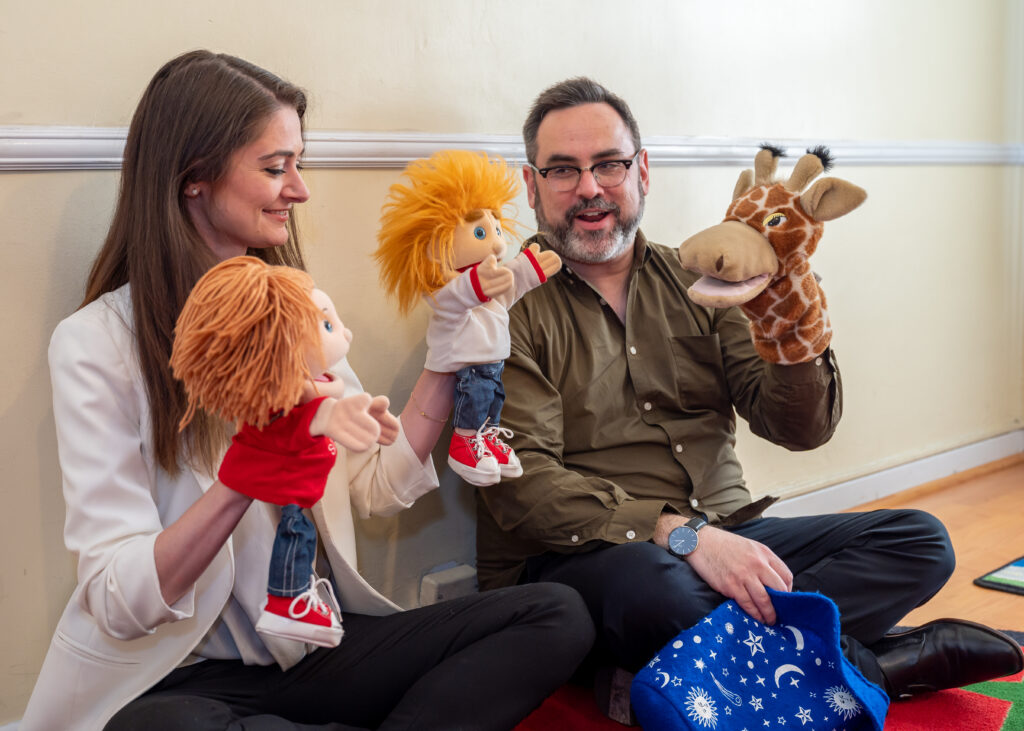
In the Playtime group, toddler and preschoolers are encouraged to interact with each other in ways that stretch their current social skill ability levels, while also facilitating age-appropriate emotion regulation strategies. Appropriate for all young children, our curriculum is designed to help any child reach their social-emotional potential.
Curriculum
During Playtime, your child will learn how to:
- share toys with peers
- take turns during games and other activities
- use words to express frustration and avoid potential conflict
- tolerate other children in their space and also their ideas and opinions
- interact with other children in a positive and friendly manner
- engage in circle time and short group discussions for Kindergarten readiness
Through parent education sessions and monthly email updates, parents will learn how to:
- teach your child appropriate social behavior in the moment
- set appropriate limits with your young child in a social situation
- play with your child in ways that promote social development
- encourage appropriate social behavior with other children
To further improve parenting skills and child compliance, Parent-Child Interaction Therapy or the Parent Management Training Group is recommended. Social skills and emotion regulation difficulties are not just hard on the children, it’s hard on parents, too. If you feel like your stress level as a parent is too high or that you want more guidance on how to parent your child, then adding a parenting component geared more widely than just through a social skills lens makes sense. Please check out our parenting programs or discuss with your intake therapist during your appointment.
Is Playtime right for me and my child? Will he or she grow out of it?
Is your child three or four years old with difficulty orienting towards other children? Do you have a hard time connecting to your three or four-year-old, especially during play? Does your child have a hard time dealing with other children? Does he seem to get into arguments or tussles more often than the average child? When your child plays, does he show an interest in other children? Does your child grab toys from other children? Does he have a hard time sharing in general? Is your child unassertive, for example, does not react when others take his toys from him? Or, does your child have a hard time recovering from social “spats”—will he have a meltdown that seems out of proportion to the incident? Does your child have sensory or regulatory issues? Has your child learned how to take turns with toys? Is your child beginning to use his words appropriately when he is frustrated or sad? Do you feel at a loss when your child misbehaves on a play date or at the park? Do you wish you knew how to teach your child more appropriate social skills?
Most parents have a hard time knowing what to do to correct the social missteps of their three or four-year-olds. These young children do not understand the same consequences as older children and require a different approach. Although behavioral strategies may be required, these children are also still learning the rules of social engagement and look to their parents and other adults to be their role models. Playtime provides parents with guidelines for how to teach appropriate social skills while effectively managing behavior in the moment.
Will my child grow out of it? The answer is maybe. Research shows that half of preschoolers with behavioral difficulties grow out of these issues by elementary school and half of them get worse. Are you a gambler? Do you like those odds? Can you wait it out? The problem is that we don’t have great markers for which kids will get better over time and which will get worse. And there are secondary issues that can emerge during the time it takes to see, such as social rejection, loneliness, and decreased positivity toward the school setting. Early intervention is always best so if your gut as a parent tells you that your child needs a social skills or emotion regulation boost, then the correct path is treatment.
Contact Compass Clinic for more information.
